Field notes from inside the high oleic palm olein category — peer-reviewed papers, frying trials, and oil-vs-oil data, plainly published. Where we can cite it, we do. Where we can’t, we say so.
Ten cooking oils. Eighteen dimensions. Composition, smoke point, fry-life, carbon footprint, water, land use, deforestation, biodiversity, employment, and price — every number sourced. Including the metrics where palm loses. The most comprehensive cooking-oil comparison on the public internet.
Every issue cites the original peer-reviewed papers it draws from. Where the science is contested, we say so. Where it’s ours, we show the math.
Sweetgreen, CAVA, Proper Hotels, dozens of independents — the SOF movement is real. The science behind it is more complicated than the discourse. An honest read from the people who make a low-PUFA oil.
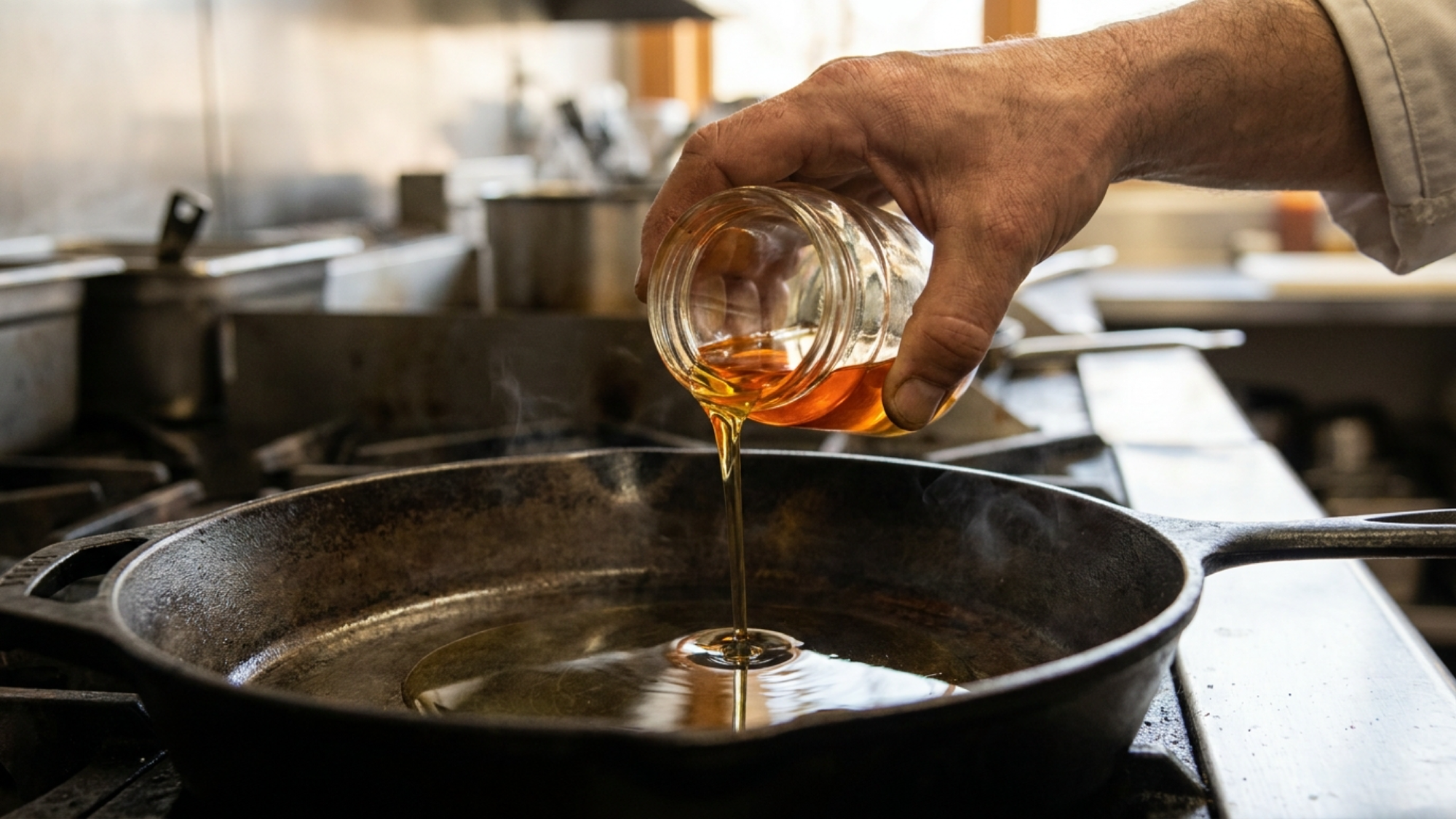
A controlled Fedepalma trial ran seven commercial oils through 300 cycles at 175°C until each crossed the EU/US discard threshold. Exact failure points and what they tell procurement.
The 1968 Minnesota Coronary Experiment was unpublished for decades. When the data was finally recovered in 2016, the story of why we replaced saturated fat with seed oils started to look very different.
In a 160-patient Colombian randomized trial, OxG palm olein moved plasma lipids similarly to extra-virgin olive oil over three months. The result matters — and so do the caveats the same authors flagged four years later.
UC Davis ran two consecutive audits of U.S. retail avocado oil. Three samples were adulterated near 100% with soybean oil. Only 3 of 29 refined private-label samples met both purity and quality standards.
When researchers followed 85,425 UK Biobank participants and broke their plasma fatty-acid ratios into quintiles, the highest-ratio group had 26% more all-cause mortality. The signal is the ratio — not the omega-6 or omega-3 in isolation.
Industrial cooking oil is a procurement-grade decision. The buyer needs to defend the choice to a CFO, a food scientist, a labelling lawyer, and a head chef — sometimes all in the same week. They deserve the actual peer-reviewed receipts, not a content-marketing thinkpiece.
So that’s what we publish. Every Issue cites the underlying study. Where the science is contested, we mark it. Where the data is ours, we show the methodology. Where our oil doesn’t win on a metric, we say so — because the procurement buyer is going to find out anyway.
It’s the same standard we hold our spec sheet to. The Research is the same brand voice in a longer form.
Every Issue points back to a single product on a single supply chain. Request a sample and the lot you receive will carry a third-party COA you can verify against the data in any of these pages.