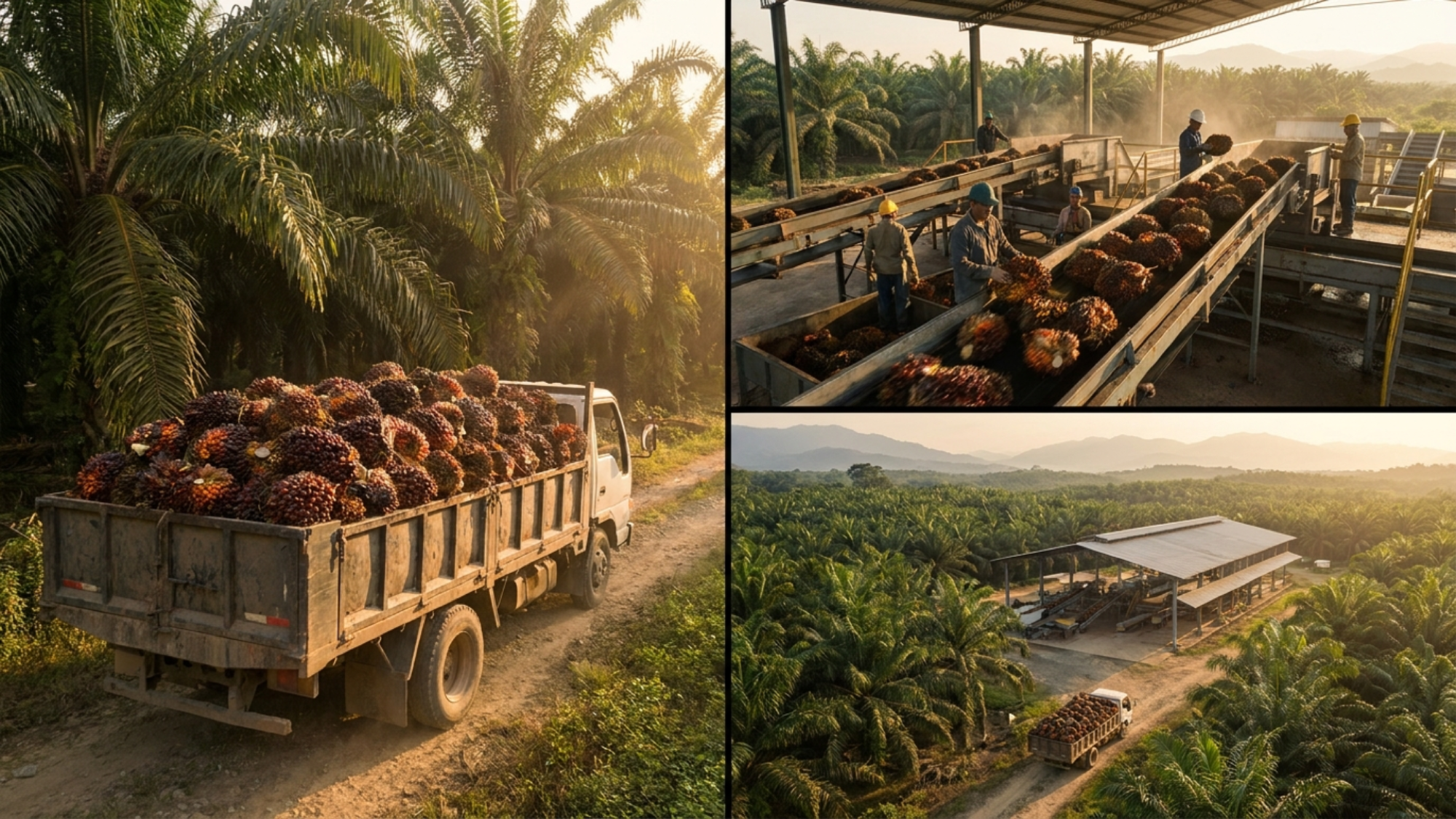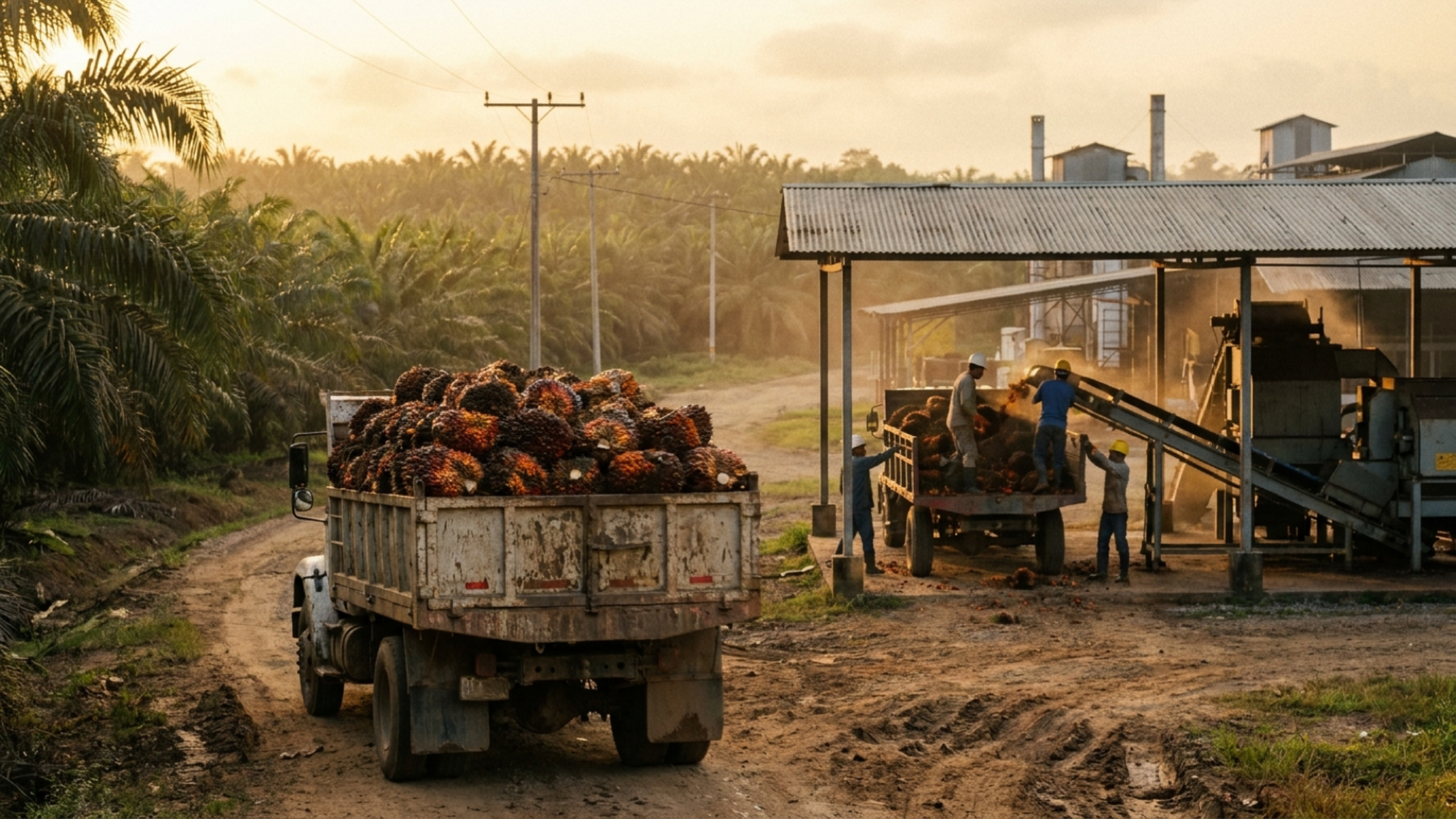
A handful of Colombian palm producers chose to plant the OxG interspecific hybrid — Elaeis oleifera × Elaeis guineensis — instead of standard African palm. That bet, made decades ago in the Llanos Orientales, is what made The Oil Insurgency possible. We source from the producers who got it right.
Standard tropical palm oil comes from Elaeis guineensis, the African oil palm. It’s the dominant global crop and yields a fat that’s ~40% oleic, ~47% saturated. Good frying oil, divisive nutritional story.
A small group of Colombian producers planted something different: the OxG interspecific hybrid, a cross of Elaeis guineensis with Elaeis oleifera — the American oil palm, native to the Neotropics. The cross yields a fat closer to ~55% oleic and ~32% saturated — compositionally much closer to olive oil than to standard palm.
The decision to plant OxG instead of standard palm was a multi-decade commitment with no guaranteed market. Hacienda La Cabaña planted its high-oleic seed garden in 1995. Guaicaramo and other Colombian producers followed. The Oil Insurgency exists because of that long bet.
A 4th-generation Herrera family operation in Cumaral, Meta. Hacienda La Cabaña was founded in 1959; the first 50 hectares of oil palm went into the ground in 1960. The founding generation helped create Fedepalma in 1962 and Cenipalma alongside it — the institutional backbone of Colombian palm agronomy was built here.
In 1995 the farm established its high-oleic seed garden — an early bet on the OxG hybrid before the high-oleic category was anything more than a research curiosity. Today it runs an advanced effluent treatment system with on-site biogas energy capture, one of very few palm mills globally to do so.
Net carbon footprint: −520 kg CO₂e per tonne CPO — net-negative through methane capture and biogas.
A 3rd-generation family operation in Barranca de Upía, Meta, founded in 1987. From the start, Guaicaramo committed to OxG plantings — and to a regenerative practice set that today includes five years pesticide- and herbicide-free, biological pest controls, nitrogen-fixing legume cover, and 40–60 tonnes/hectare of compost returned to the soil annually.
Triple-certified (RSPO + ISCC + ISO 14067) with 2025 RSPO P&C recertification. Methane capture and biogas energy on-site. The Los Clavelitos biodiversity corridor — 400+ hectares of restored riparian forest stitched through the productive plantation — sits here.
Net carbon footprint: −851 kg CO₂e per tonne CPO — net-negative, multiples better than industry average.
La Cabaña and Guaicaramo are The Oil Insurgency’s founding sources — not its only options. Colombia’s OxG category includes a growing group of producers who’ve made the same long bet on the hybrid, the same commitment to regenerative practice, and the same investment in traceable supply. As demand grows, The Oil Insurgency’s sourcing network grows with it — always against the same craft and certification standards.
Colombian palm has a fundamentally different deforestation story than Indonesian or Malaysian palm. Cultivation in the Llanos Orientales has occurred largely on former cattle pasture and unutilized grassland — not on cleared rainforest. Roughly 45% of Colombian palm expansion has been into former cattle pasture and unutilized grassland in the Llanos, and about 40% of Colombia’s palm production now comes from the Llanos del Orinoco.
Colombia leads Southeast Asia in the percentage of its palm production that is certified sustainable (~28% vs ~19% Indonesia, ~23% Malaysia).
One honest caveat: reputable research (Mongabay, Science Advances, Dialogue Earth) notes that “deforestation-free” can still understate impacts on remnant native grassland and dry-forest ecosystems. The Llanos is its own biome worth protecting on its own terms — not just a less-bad version of rainforest.
Our partners commit to RSPO standards and zero-deforestation practices. The story is better than commodity SE Asian palm. It is not, and should not be sold as, costless.
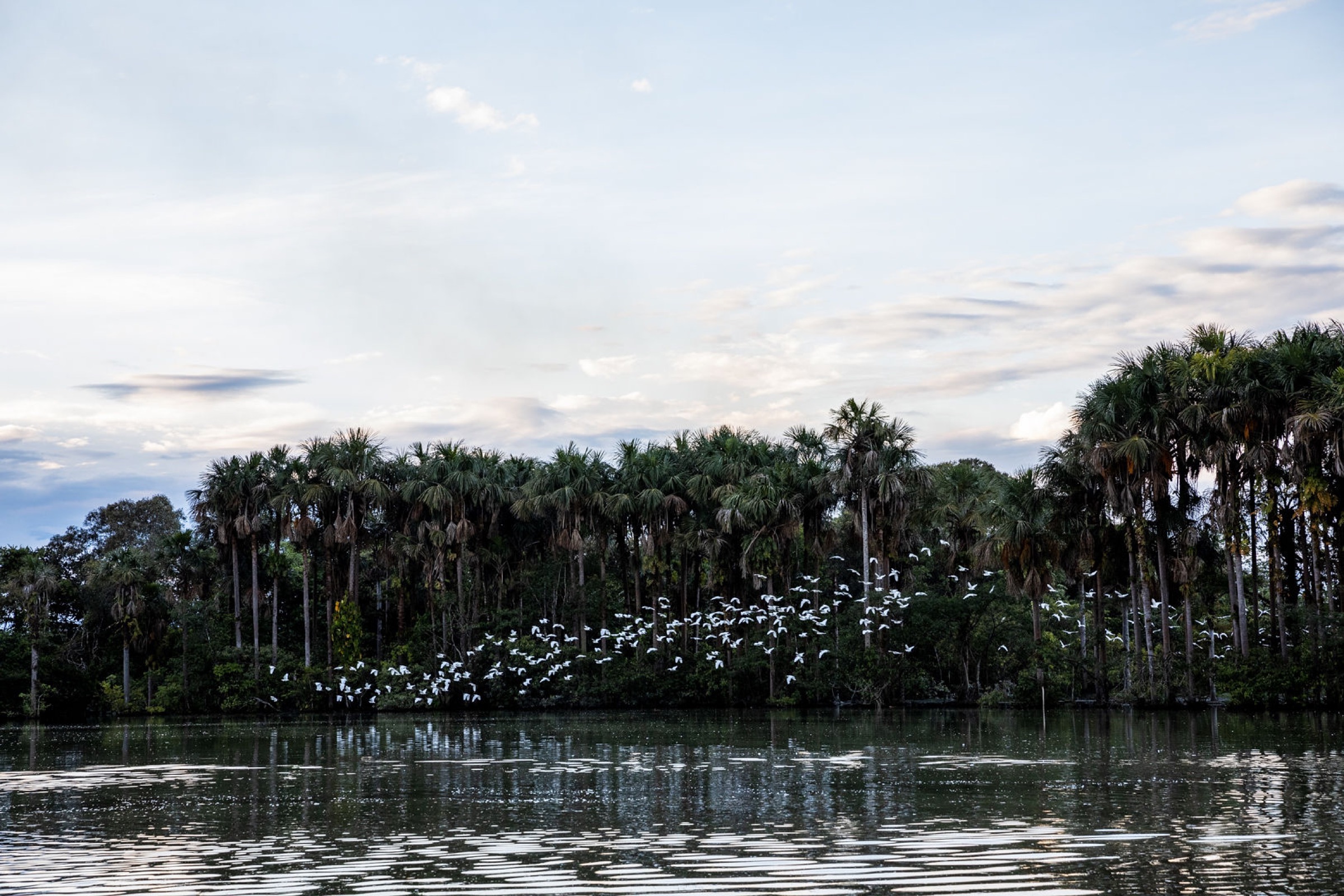
400+ hectares of restored riparian forest, secondary native woodland, agroforestry mosaics, and wildlife corridors stitched through the productive plantation — recognized by the RSPO as a flagship biodiversity initiative.
Monitored continuously through camera traps, point counts, and transects covering mammals, birds, reptiles, amphibians, invertebrates, and pollinators. Riparian strips are protected. Cattle are excluded. The system works because it’s designed to work.
Every shipment carries documentation pointing to the specific farm block, harvest week, and crew that produced the source fruit. Not commodity supply.
Each shipment includes a third-party Certificate of Analysis: fatty acid profile, FFA, peroxide value, moisture, color — the receipt for what’s in the tank.
From mill to port to ocean container to your facility — complete chain-of-custody documentation with no commingling with anonymous bulk palm.
Want to see it?
Strategic partners are invited to visit the operations directly — the farms, the mill, the people. It’s a private conversation, not a public program. Reach out and we’ll set it up.