There is exactly one published human randomized clinical trial that pits Colombian OxG hybrid palm oil directly against extra-virgin olive oil on the question that matters most to a procurement buyer: does it move plasma lipids comparably? The trial is Lucci et al., published in the Royal Society of Chemistry’s journal Food & Function in early 2016.1
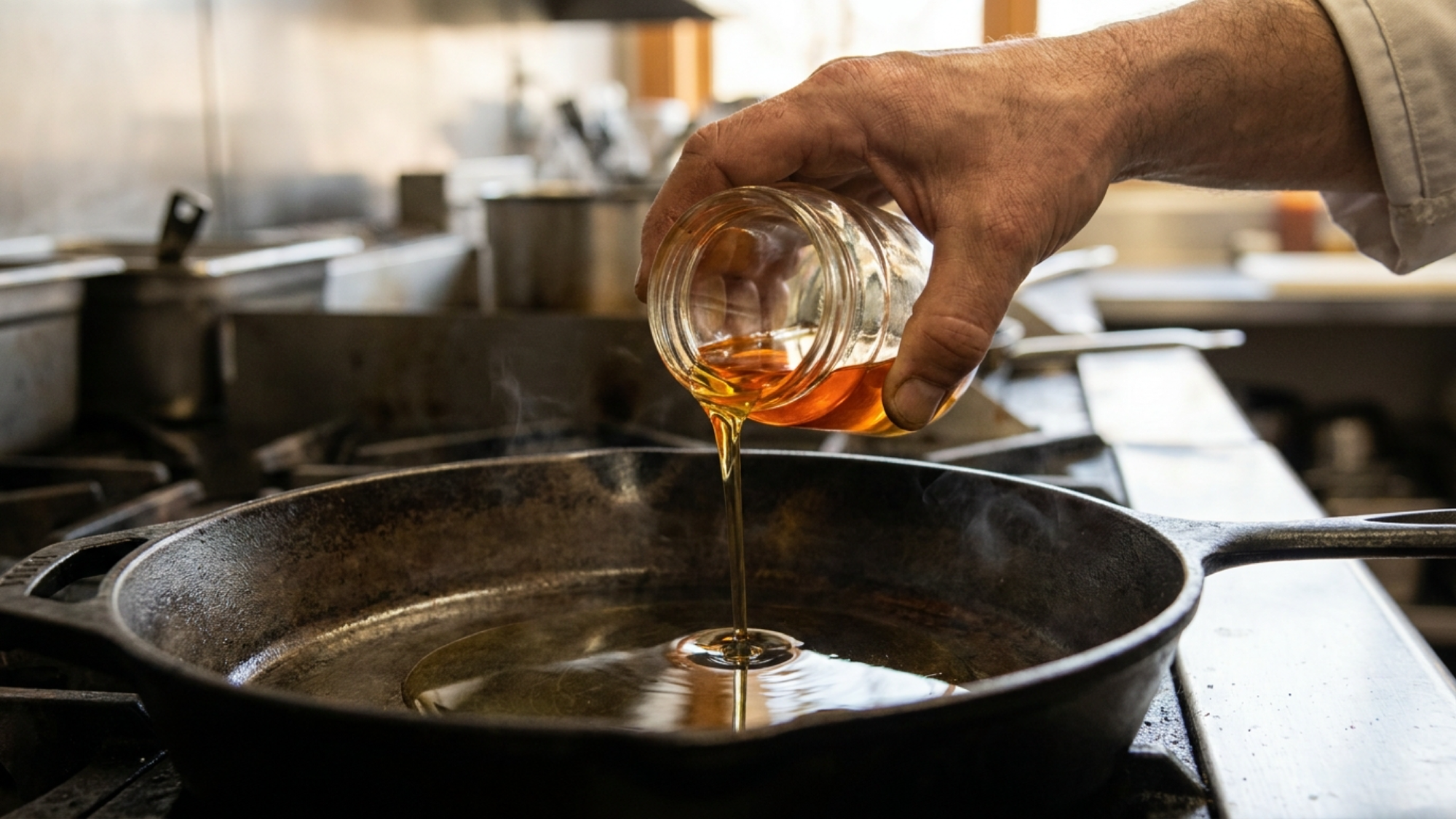
The setup: 160 Colombian adults aged 50 and over, randomized between two arms. One group received 25 milliliters per day of crude hybrid palm oil (HPO). The other received 25 milliliters per day of extra-virgin olive oil (EVOO). Three months. Plasma lipid panels at baseline and at endpoint. Repeated-measures ANOVA on the change scores.
Both groups dropped serum cholesterol. Both dropped LDL. The differences between the groups were not statistically significant. The HPO arm lowered total cholesterol by 6.3% and LDL by 13.3%. The EVOO arm lowered total cholesterol by ~9% and LDL by ~18%. The numbers favor olive oil slightly, but the trial wasn’t powered to demonstrate equivalence to a small margin — it was powered to detect a clinically meaningful difference, and there wasn’t one.1
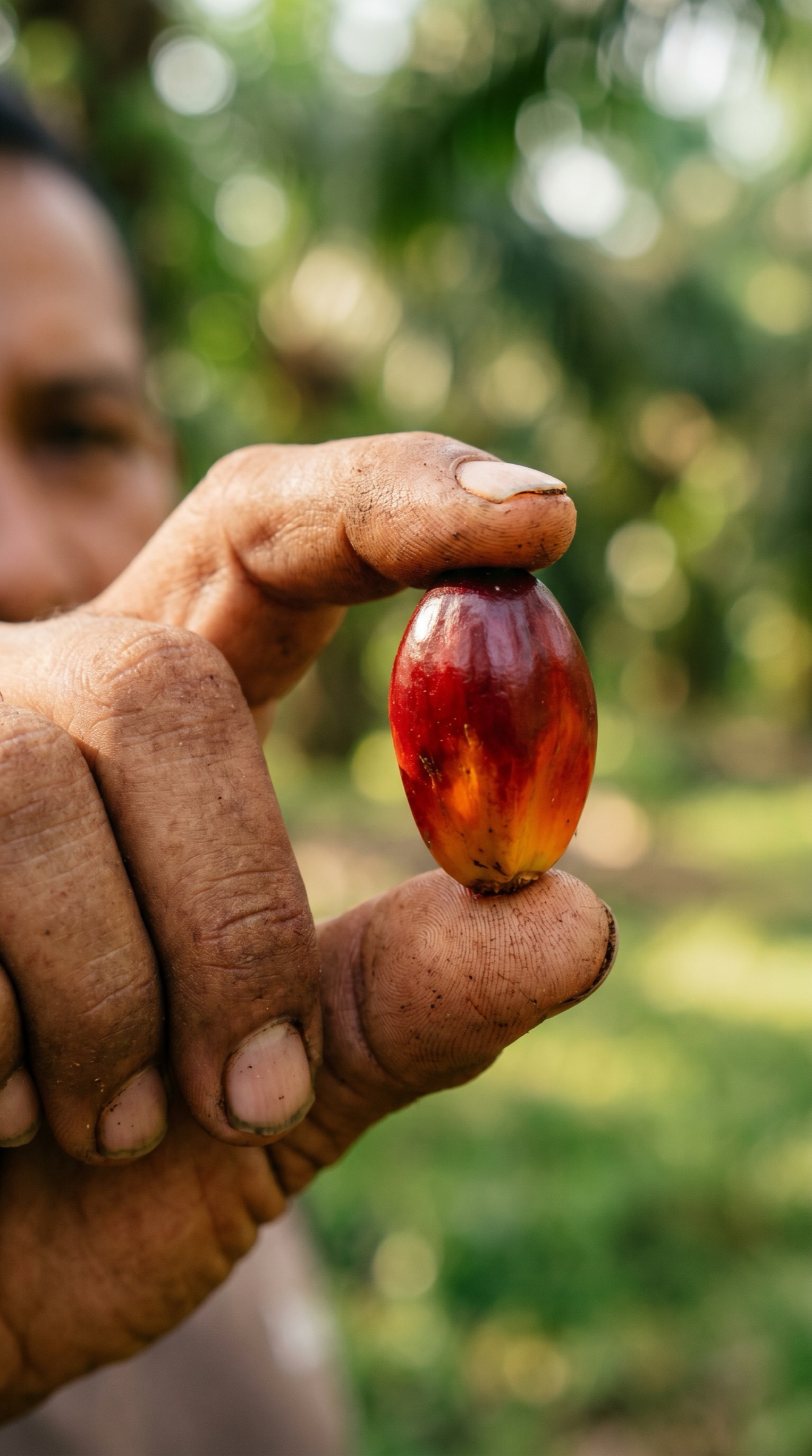
The fatty-acid composition of the HPO used in the trial: 30.8% saturated, 56.1% monounsaturated, 11.1% polyunsaturated. Tocols (vitamin E family) at 25.9 mg/100g, of which roughly 90% were tocotrienols rather than tocopherols. Phenolic content 190 ppm. The crude HPO was meaningfully different from standard refined palm olein on every one of these metrics.1
The paper’s headline language called HPO “a tropical equivalent of olive oil.” That phrase has been quoted ever since, sometimes with sourcing and sometimes without.
The walk-back.
Four years later, in 2020, the same Italian research group (Mozzon, Foligni & Mannozzi) wrote a review of OxG hybrid palm oil literature in Foods (MDPI).2 Buried in the discussion section is a sentence the entire HOPO category should be required to read:
The same authors who coined the equivalence phrase walked it back. The clinical-lipid finding stands — the trial happened, the data is published. But the framing — “equivalent to olive oil” — the authors themselves now consider unsupported.
The refining caveat.
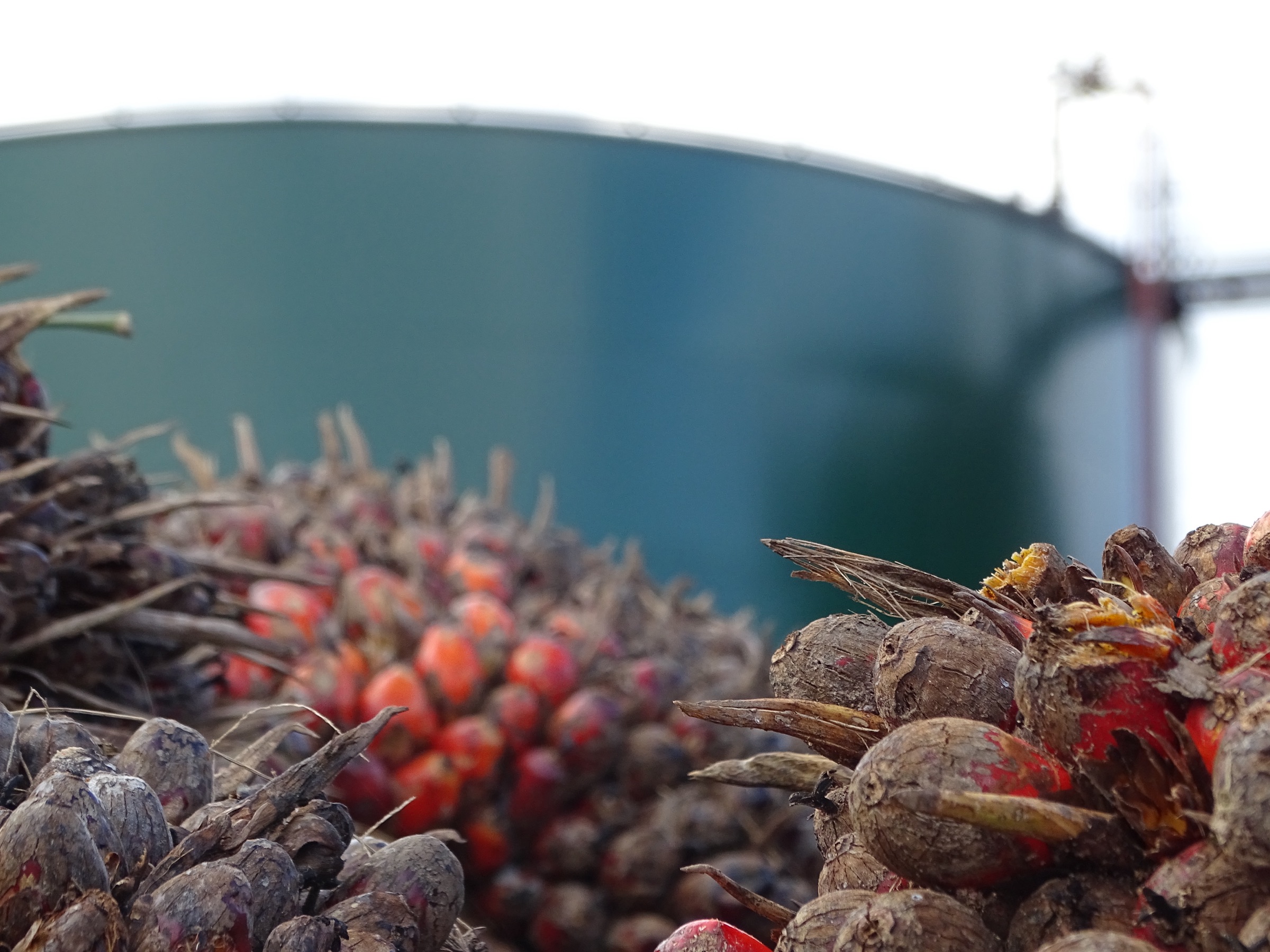
There’s a second caveat the Lucci 2016 trial doesn’t close. The trial used crude HPO — the crude, unrefined oil — carotene-loaded, deep orange. Industrial supply of HOPO ships refined: physically refined, bleached with natural absorbents, deodorized to a pale neutral oil suitable for industrial cooking.
A 2024 paper in Food Bioscience by Gonzalez-Diaz et al. measured the refining loss directly on Colombian HOPO. Vitamin E retention through refining: 70–85%. Phenolic compound retention: more than 20%. Carotenoid retention: less than 2%. Most of the nutraceutical advantage documented in the crude oil is stripped during refining.3
What this means in practice: the cardiovascular trial was conducted on a product with bioactive minor components that refined HOPO largely doesn’t carry. The fatty-acid backbone — the ~55% oleic, ~32% saturated, ~13% PUFA composition — survives refining cleanly. The tocotrienol-and-phenolic story doesn’t.
What this actually tells you.
The honest, citable statement TOI can make: Colombian OxG palm olein is the only tropical palm oil with a published human RCT showing clinical lipid changes statistically similar to extra-virgin olive oil over three months. Not better. Not equivalent. Statistically similar on plasma lipid endpoints in a 160-patient three-month parallel-arm trial. That’s the receipt, in its full form.
What TOI cannot honestly say: that HOPO is “the tropical equivalent of olive oil.” The same authors who said that walked it back. We don’t use that framing on the site, and we’d rather you didn’t either.
Crude trial. Refined product.
The Lucci 2016 RCT was conducted on crude HPO. TOI ships refined HOPO — which loses most of the carotenoids and a meaningful share of the tocols during refining. The fatty-acid composition survives refining intact, and that’s the part of the trial result that translates cleanly to the industrial product. The nutraceutical-minor-components story doesn’t translate cleanly. The COA shows what’s in the lot.